
For Teachers & Parents
Tales of Harmony Lane is a seven-book picture-book series for ages 4–8 from Front Porch Press. In each story, one child’s difference becomes part of what makes the neighborhood work. This page gives you simple discussion questions and an activity for every book, for read-alouds at home, in the classroom or in therapy sessions.
Before you read
- Look at the cover together and ask what the child might be feeling.
- Each story takes about 5–7 minutes to read aloud.
- The questions below have no wrong answers. Let children lead.

Finn’s Map of Harmony Lane
Book 1 · Autumn. Being the new kid and the neighbors who make room for you.
Talk about it
- How did Finn feel when he first moved to Harmony Lane? Have you ever felt that way?
- Finn noticed details other people missed. What is something you notice that others might not?
- What can we do to help a new classmate feel welcome?
Try it: Draw a map of your street, school or classroom. Mark one place where someone new could feel welcome.

Gus’s Whisper Walk
Book 2 · Winter. Being Deaf, sign language, and changing the game instead of the child.
Talk about it
- Why didn’t the regular Whisper Walk work for Gus?
- How did the neighbors change the game so everyone could play?
- What is one game you play that could be changed so more friends can join in?
Try it: Learn to sign “friend” and “thank you” together, then use them all week.
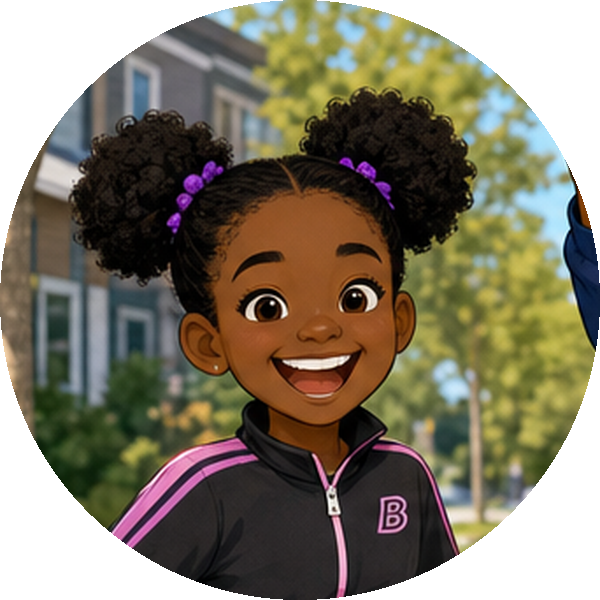
Buttercup’s Shortcut
Book 3 · Spring. A wheelchair racer and a course everyone can use.
Talk about it
- What made this year’s relay route hard for Buttercup?
- Who decided how to fix the course? Why does that matter?
- Look around your school. What would make it easier for everyone to get around?
Try it: Walk your playground or hallway and list anything that would be hard to get past with a wheelchair or stroller.

Pearl’s Petal Countdown
Book 4 · Spring. A speech difference, patience, and being heard.
Talk about it
- How did Pearl feel about speaking at Story Circle without her twin?
- What did the listeners do that helped Pearl?
- How can we show someone we are really listening?
Try it: Practice “patient listening”: one person shares, and everyone waits until they finish before speaking.

Grandma Tessie’s Golden Hour
Book 5 · Summer. Slowing down and noticing the wonders you miss when you rush.
Talk about it
- Why was Skipper in such a hurry at first?
- What did Grandma Tessie help Skipper notice?
- What is something wonderful you saw today because you slowed down?
Try it: Take a slow “noticing walk” and draw three small things you have never noticed before.

Splash’s Twilight Medley
Book 6 · Summer. Being blind and discovering that different senses are strengths.
Talk about it
- How does Splash know where he is going in the pool?
- Why did the new kid worry about the race at dark? What did they learn?
- Which of your senses do you use most? How could you use a different one?
Try it: Close your eyes for one minute and list every sound you can hear.

Quill’s Harvest Hush
Book 7 · Autumn. Sensory sensitivity, quiet spaces, and celebrating your own way.
Talk about it
- Why was the Harvest Festival hard for Quill even though he built it?
- What did the neighbors create so Quill could enjoy the festival?
- Where is a calm spot you can go when things feel too loud?
Try it: Design a “quiet corner” for your classroom or home. What would you put in it?
Classroom and clinic licenses
Each purchase is for personal and single-classroom use. Teachers, schools, librarians and therapists who would like to share the books more widely can email sabrina@shiningangelpublishing.com to ask about classroom and clinic licenses.